
Key Takeaways
- Zirconia is significantly stronger than traditional porcelain, but it can still crack under specific conditions – understanding why matters when choosing a prosthetic.
- Manufacturing defects like porosity, poor fit, and sintering failures are a hidden but real risk in full-arch prosthetics – especially when lab work is outsourced.
- A true lifetime warranty on a zirconia full arch should explicitly cover both structural cracks from normal use and fabrication defects – not just one or the other.
- Fusion Dental Implants offers one of the most clearly defined lifetime warranties in the industry, covering both failure types with no expiration or prorating.
- Keeping a lifetime warranty active comes down to a few simple habits – and understanding what can void it is just as important as knowing what is covered.
Most people shopping for full-arch dental implants focus on the material, the cost, and the procedure itself. But there is a question worth asking that rarely comes up during consultations: What happens if something goes wrong after? The answer separates a good investment from a great one.
The Only True Lifetime Warranty on Zirconia Full Arches
Lifetime warranties in dentistry are not uncommon as a marketing term – but the actual coverage behind them varies enormously. Many warranties cover only the implant post, which rarely fails, exclude lab-related failures, or quietly expire after a few years of prorating. A genuine lifetime warranty on the prosthetic itself – the arch you actually chew with – is a much rarer thing.
Fusion Dental Implants, based in Roseville, CA, backs every zirconia full arch with a no-expiration, no-prorating lifetime warranty. The coverage explicitly includes two categories that most warranties avoid naming at all: structural cracks from everyday use, and defects that originated during fabrication or design. Understanding what those two things actually mean – and why they differ – is the foundation for evaluating any full-arch warranty. Full terms and additional detail on both coverage types are available at fusiondentalimplants.com.
Why Zirconia Cracks – And When It Doesn’t
Zirconia’s Strength vs. Porcelain
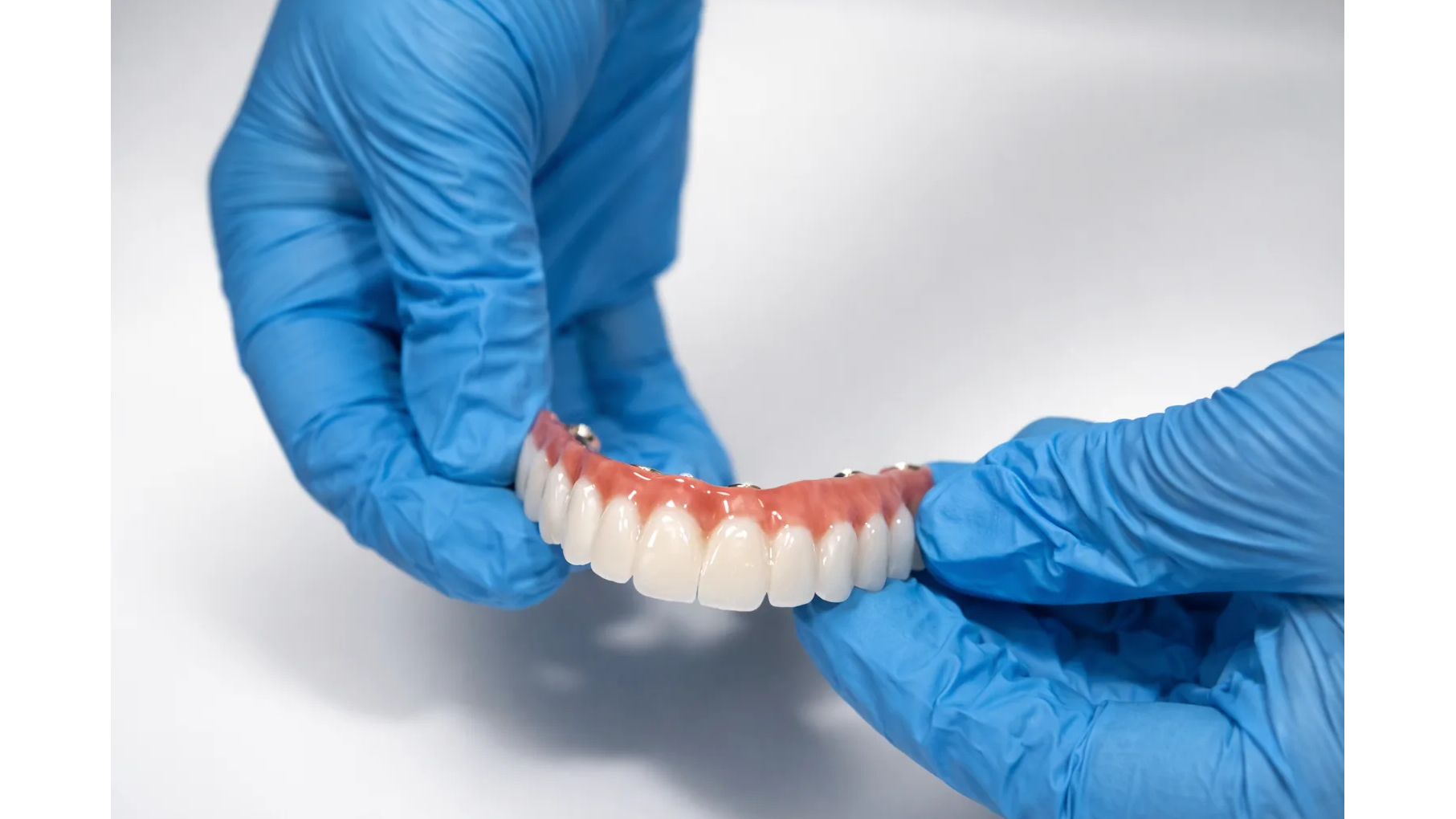
Zirconia ceramic has become the dominant material for full-arch prosthetics for good reason. Its flexural strength and fracture toughness are substantially higher than traditional porcelain – industry data generally places zirconia at roughly five times the strength of porcelain – and it rivals metal alloys without the aesthetic downsides. Zirconia does not chip, stain, or trigger the metallic taste sometimes associated with older restorations. It is also biocompatible, meaning the body accepts it without the allergic reactions that can occur with certain metal alloys.
Zirconia is sintered at extreme temperatures into a dense, hard ceramic that handles normal chewing forces without issue. Research on full-arch zirconia restorations has shown minimal fracture rates over multi-year periods when fabrication and placement protocols are properly followed. Many zirconia crowns and bridges have documented lifespans exceeding 10 to 15 years, with well-made ones lasting considerably longer.
What Actually Causes Structural Cracks
Even with its impressive track record, zirconia is not indestructible. Structural cracks – fractures in the arch material itself – tend to happen under specific circumstances:
- Occlusal overload: Bite forces that consistently exceed what the arch was designed to handle, often tied to uneven contact points or a poorly balanced prosthetic.
- Parafunctional habits: Bruxism (teeth grinding) generates forces far beyond normal chewing, putting repeated stress on any prosthetic material.
- Improper design: An arch that is too thin in key areas, or one that does not correctly account for bite distribution, is more susceptible to fatigue fractures over time.
The key phrase in any structural warranty is normal everyday use. Cracks that develop from regular eating, speaking, and daily function – without trauma or misuse – fall squarely into this category. That is the scenario a meaningful lifetime warranty should address without question.
Manufacturing Defects: The Hidden Risk
Porosity, Fit, and Sintering Failures
While structural cracks get most of the attention, manufacturing defects are a subtler and often overlooked failure mode. These are problems that originate during the fabrication process itself – before the prosthetic ever enters a patient’s mouth.
Common manufacturing defects in full-arch prosthetics include:
- Porosity: Microscopic voids or air pockets within the zirconia material that weaken its internal structure, making it more prone to fracture under load.
- Inaccurate fit: An arch that does not seat precisely on the implants creates uneven stress distribution, accelerating wear and increasing fracture risk over time.
- Sintering failures: Zirconia must be fired at precise temperatures to reach its full density and strength. Deviations in this process can leave the material under-densified and structurally compromised in ways that are not immediately visible.
These defects do not always appear on day one. Some emerge gradually over months or years, making it difficult for patients – and even some clinicians – to connect the failure back to its fabrication origin. That is exactly why explicit warranty coverage of manufacturing defects carries so much weight.
How In-House Labs Reduce These Risks
The single biggest quality-control variable in prosthetic fabrication is whether the lab is in-house or outsourced. When a practice sends cases to an external lab, it loses direct oversight of materials, firing protocols, and fit verification. Communication happens through paperwork and shipping, not real-time collaboration.
An on-site laboratory changes that dynamic entirely. Technicians and clinicians can communicate immediately, adjust restorations before they are finalized, and apply consistent standards at every step. Fusion Dental Implants operates its own in-house dental lab – a direct contributor to both the quality of each arch and the confidence behind offering a lifetime warranty on fabrication defects. A practice willing to cover manufacturing failures for life has strong incentive to get fabrication right the first time.
What Fusion’s Lifetime Warranty Actually Covers
Structural Cracks from Normal Use
Any crack or break in the zirconia arch material that results from normal, everyday function is covered. If the arch fails under the kind of use it was designed for – eating, speaking, regular daily life – the replacement comes at no cost. No prorating based on how long ago the original was placed. No expiration window.
Fabrication and Design Defects
Any defect that originated during the fabrication or design of the prosthesis is also covered. This is the category that most warranties do not address by name, making Fusion’s explicit inclusion of it a meaningful distinction. It closes the gap between a material that failed and a material that was never made correctly to begin with.
What’s Excluded
The warranty does not cover everything, and the boundaries are worth understanding clearly:
- Trauma or misuse: Damage from accidents, falls, or habits outside normal use is not covered.
- Treatment by another provider: Any work performed on the prosthetic outside the Fusion Dental Implants network voids coverage.
- Cosmetic changes: Replacements are exact matches – elective upgrades or aesthetic changes beyond the original are not included.
- Implant integration issues: The warranty covers the zirconia arch itself, not complications related to the titanium implants or osseointegration.
The 4-Step Replacement Process
If a covered failure occurs, the process is designed to be straightforward – no ambiguity about who handles what.
- Contact: Reach out to any Fusion Dental Implants center and report the issue.
- Evaluation: The clinical team examines the prosthetic to confirm the failure falls under covered warranty terms.
- Fabrication: A replacement arch is crafted in the in-house lab – an exact match to the original, using the same materials and specifications.
- Replacement: The new arch is placed at no cost, and the patient leaves with a functioning smile again.
Because fabrication happens in-house, there is no waiting on an external lab’s schedule – a detail that makes the replacement timeline considerably shorter than at practices dependent on outside vendors.
Keeping Your Warranty Valid
Checkups, Night Guards, and Care Plans
A lifetime warranty is only as good as the patient’s role in maintaining it. Coverage requires adherence to a few straightforward conditions:
- Regular checkups: Attend recommended cleaning and monitoring appointments. These visits catch early wear patterns, bone changes, and fit issues before they escalate.
- Night guard use: If a night guard is prescribed – typically for patients with bruxism or clenching tendencies – wearing it consistently is a warranty requirement. Grinding forces are among the most common causes of prosthetic stress, and a night guard is the most direct way to manage that risk.
- Post-treatment care plan: Following all care instructions provided after surgery and throughout long-term maintenance keeps coverage active.
- Stay within the Fusion network: All implant-related treatment must remain within Fusion Dental Implants locations. Treatment by an outside provider voids the warranty.
None of these conditions are unusual – they align patient habits with the same clinical best practices that keep any dental prosthetic performing well for decades.
A Lifetime Warranty Is Worth a Free Consultation
Choosing a full-arch prosthetic is one of the more significant decisions a person can make for long-term oral health. The material, the surgical expertise, the lab quality, and the post-placement support all factor into how that investment holds up over decades. A lifetime warranty that explicitly names both structural cracks and manufacturing defects – with no expiration and a clear replacement process – is a meaningful signal of how seriously a provider takes each of those variables.
For anyone in the Roseville area or broader Northern California region weighing full-arch implant options, a free consultation that includes 3D imaging and a personalized treatment plan is a practical, low-barrier way to understand exactly what a lifetime-backed zirconia arch would look like for a specific case. Fusion Dental Implants offers that consultation at no cost – a solid first step toward a permanent, protected smile.
Fusion Dental Implants
+1 916 866 7595
911 Reserve Dr.
Ste 150
Roseville
CA
95678
United States


