Mason Bee Predator Alert: Invasive Houdini Fly is Spreading Across North America
PR Newswire
SEATTLE, April 22, 2026
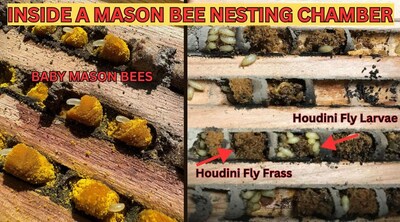
SEATTLE, April 22, 2026 /PRNewswire/ — The invasive Houdini fly (Cacoxenus indagator), a kleptoparasitic insect about the size of a fruit fly, is spreading across North America and significantly impacting mason bee populations. Over her lifetime, a single Houdini fly may lay 300–500 eggs inside bee nests, while a mason bee typically lays about 15, creating a serious imbalance that can reduce bee survival and threaten mason bee populations.
Rent Mason Bees, the largest solitary bee company in the country, is partnering with researchers Abigail Lehner (University of California, Davis) and Natalie Boyle (Penn State University), to better understand how the Houdini fly spreads and what steps can help protect mason bees. The research partnership is supported in part by a grant from Western Sustainable Agriculture Research and Education (WSARE).
Adult Houdini flies exploit mason bee nests to lay their eggs. They enter nesting chambers while the mother bee is away collecting pollen or mud and deposit eggs directly on the pollen provisions intended to nourish developing bees. When the larvae hatch, they consume the pollen, causing the developing bee to starve. Adult flies emerge the following spring at the same time as mason bees, enabling infestations to spread to new nests.
Research led by Lehner has documented rising parasitism rates in backyard bee hotels over the past three years, increasing from approximately 1 in 10 bees affected in 2023 to 1 in 3 bees in 2025, highlighting the growing need for awareness and preventative management practices. Watch video
Mason bees are gentle, early-season pollinators commonly hosted by backyard gardeners and increasingly used by farmers to help fertilize spring crops including apples, cherries, almonds, peaches, and blueberries. They pollinate up to 95% of the blooms they visit, playing an important role in supporting resilient food systems and biodiversity. Unlike honey bees, mason bees are solitary, with each female building and provisioning her own nest in small natural cavities or bee houses.
“Many people don’t realize that mason bee houses require care, just like any managed pollinator system,” said Lehner. “Using nesting materials that can be opened and cleaned each fall is one of the most important steps to prevent predators from building up inside the nest and harming future bee populations.”
Boyle adds, “Bee hotels made from bamboo or drilled wood are often used with good intentions, but they cannot be opened for inspection. While they may appear healthy from the outside, they can actually become breeding grounds for predators that damage future generations of mason bees.”
Experts emphasize that bee houses require seasonal maintenance to remain healthy habitats.
3 STEPS FOR RESPONSIBLE MASON BEE STEWARDSHIP
- Use nesting materials that can be opened and cleaned. Avoid bamboo or drilled wood blocks that cannot be opened and inspected.
- Remove nesting materials after spring nesting activity (they only live 6-8 weeks)
- Harvest and clean cocoons in the fall to remove pests and parasites
“We clean over 3 million cocoons every season, removing 100% of Houdini fly larvae,” said McKelvie. “We are seeing increased activity during fall harvest. Opening nesting materials and cleaning cocoons each fall is critical for protecting future mason bee populations. We provide step-by-step videos to help hosts learn how to Harvest & Clean Your Own Bees, or you can send your nesting materials back to us and we will clean and store your bees for the winter.” How We Clean 3 Million Cocoons
HOW YOU CAN HELP
Researchers encourage gardeners, orchard managers, and bee hosts to help track and slow the spread of Houdini flies:
- Monitor bee houses during spring activity
- Report sightings of small flies hovering near nest entrances
- Purchase loose, cleaned cocoons from certified suppliers
- Harvest and clean cocoons each fall to remove overwintering pests
Report sightings: HUNT FOR HOUDINI! How to Identify, Report & Protect Mason Bees from Houdini Fly
Learn proper cocoon cleaning methods: Learn How to Clean Your Own Cocoons
Researchers are also recruiting volunteers with confirmed Houdini fly activity to participate in pilot studies evaluating trap designs to reduce fly populations near nesting sites. If interested, please report and request assistance.
About Rent Mason Bees
Rent Mason Bees is the largest supplier of solitary bees in the United States, cleaning and preparing more than 3 million mason bee cocoons each year to remove predators and ensure healthy pollination. The company provides bees, habitat systems, and education to gardeners, farmers, schools, and communities across North America and collaborates with research teams across the country to advance science-based care and management of solitary bees. www.RentMasonBees.com
 View original content to download multimedia:https://www.prnewswire.com/news-releases/mason-bee-predator-alert-invasive-houdini-fly-is-spreading-across-north-america-302750506.html
SOURCE Rent Mason Bees
